


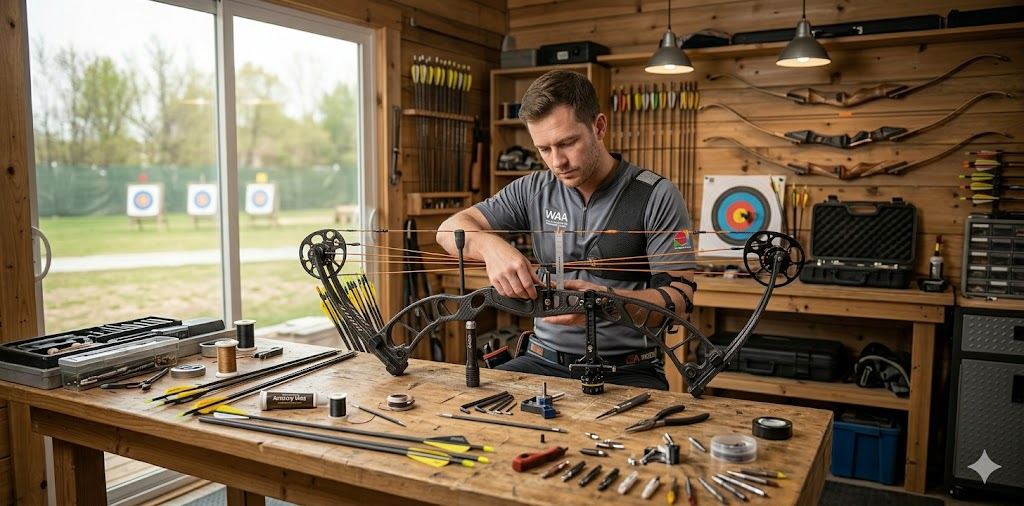
How to Maintain Your Bow for Long Life
1. Keep Your Bow Clean
Dust, dirt, moisture, and debris can gradually affect the performance of your bow. After each practice session or competition:
Wipe the bow using a soft, dry cloth.
Remove dirt from the limbs, riser, and string area.
Avoid harsh chemicals or strong cleaning agents.
For stubborn dirt, use a slightly damp cloth and dry it immediately.
Regular cleaning prevents buildup and keeps components in good condition.
2. Inspect the Bow String Regularly
The bow string experiences constant tension and wear. Ignoring string condition may reduce accuracy and increase the chance of damage.
Check for:
Fraying or broken strands
Loose serving material
Excessive wear around contact points
Uneven string condition
Apply string wax regularly according to the manufacturer’s recommendations. Wax helps reduce friction and protects the fibers from drying out.
3. Store Your Bow Properly
Improper storage is one of the most common reasons for shortened bow life.
Follow these storage practices:
Keep the bow in a cool, dry place.
Avoid direct sunlight for long periods.
Protect it from excessive heat and humidity.
Store it in a quality bow case.
Keep it away from water exposure.
High temperatures and moisture can damage strings and affect bow components.
4. Check Limbs and Components
Inspect limbs and hardware before shooting sessions.
Look for:
Cracks or chips on limbs
Loose screws and bolts
Damaged cams (for compound bows)
Bent or worn components
If any part appears damaged, stop using the bow until it has been repaired or replaced.
5. Avoid Dry Firing
Dry firing means releasing the string without an arrow loaded. This creates excessive force within the bow and can cause severe damage to limbs, strings, and other components.
Always ensure an arrow is properly nocked before drawing and releasing the bow.
6. Protect Your Bow During Transportation
Many bows are damaged during travel rather than during use.
Transportation tips:
Use a padded bow case.
Secure accessories properly.
Avoid placing heavy items on top of the bow.
Keep arrows and accessories organized separately.
Proper transportation reduces the risk of accidental damage.
7. Schedule Regular Professional Inspection
Even with good maintenance, periodic inspection by experienced technicians can help identify issues that may not be visible immediately.
Professional checks can help:
Tune bow performance
Adjust components
Identify hidden wear
Improve shooting consistency
Conclusion
Proper bow maintenance is not complicated, but consistency matters. Cleaning your bow, inspecting strings and components, storing equipment correctly, and avoiding misuse can greatly extend its life. A well-maintained bow delivers better performance, improved safety, and reliable results for years.
Take care of your equipment today so it continues to perform at its best every time you step onto the range